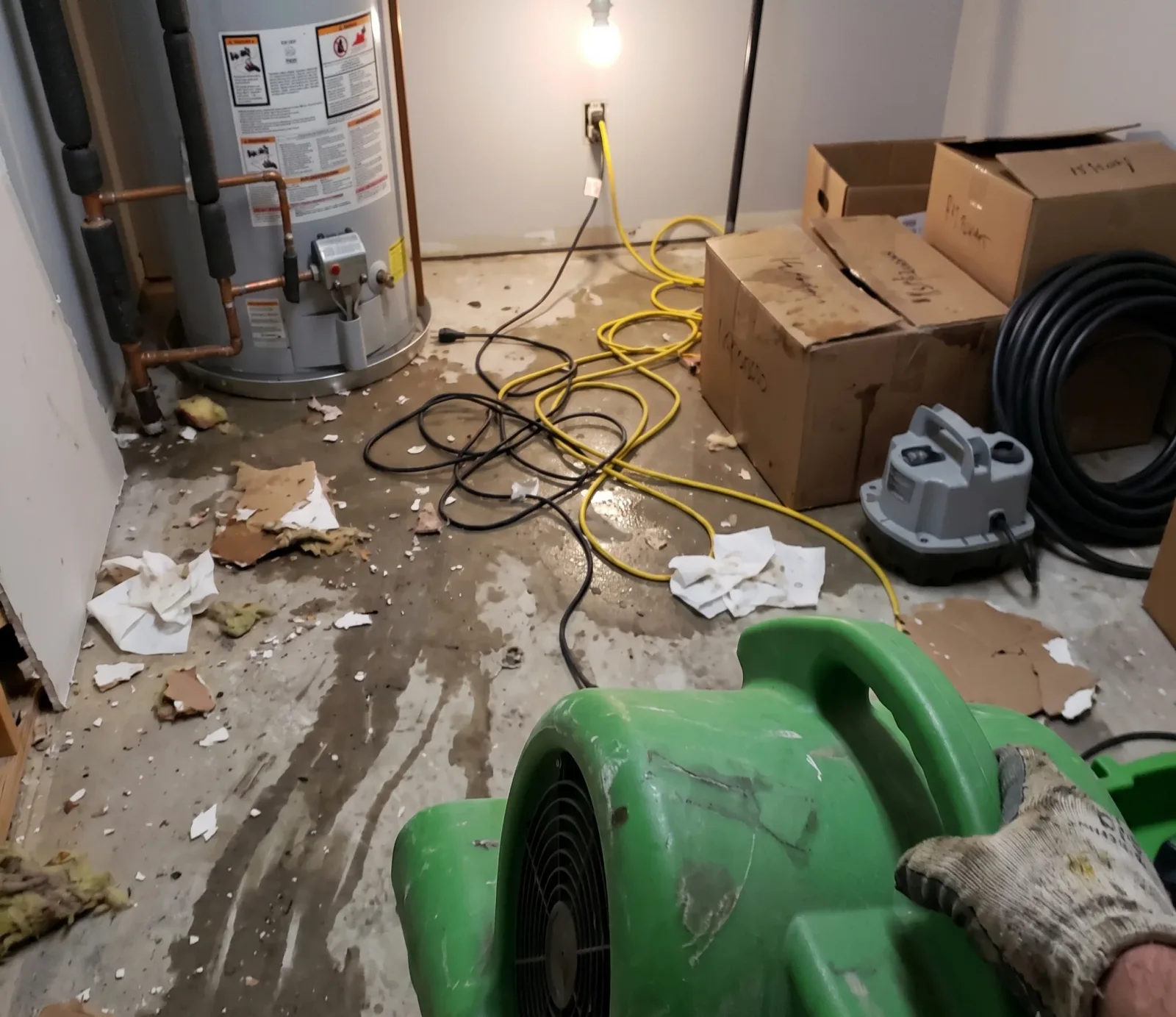
Category 1, 2, and 3 Water Damage: What's the Difference
Why the category label under S500 decides how your cleanup runs, and what it costs.
S500 grades water losses by contamination, not by how much water there is. Category 1 comes from a sanitary supply line, Category 2 carries some contaminants like a washing machine backup, and Category 3 holds pathogens and raw sewage. Time and temperature push a clean loss toward reclassification, which is why cleanup method and cost climb fast the longer Tempe water sits.
Why the Category Sets the Whole Job
Every water loss in Tempe gets a category before any drying starts, and that call shapes the whole job. The IICRC S500 standard sorts water into three tiers by contamination, not by how much square footage got wet. A water heater failure near Mill Avenue and a backed-up drain near Kiwanis Park can flood the same amount of flooring and still call for completely different cleanup methods.
Category 1 is clean water straight from a supply source: a burst line under a Warner Ranch kitchen sink, a failed water heater, an overflowing tub. No pathogens, no dissolved contaminants worth naming. If it's caught and dried fast, Category 1 is the cheapest and simplest category to resolve, and most porous materials can be saved instead of torn out.
Water rarely holds still long enough to stay Category 1. A water heater failure near McClintock Drive that sits against baseboards for a day picks up dye, oils, and debris from carpet pad and cabinetry, and the same puddle a Tempe crew calls clean on day one can test as Category 2 by day three. Time and temperature drive that shift, not the source alone.
Category 1: Water That Started Out Clean
Category 1 losses are the easiest ones to walk back from. A supply line break in a Holdeman home, handled inside the first day or two, usually means drying equipment and maybe a baseboard replacement, not a gutted room. No pathogen load means drywall, carpet pad, and subfloor often survive if extraction starts before the water sits.
Category 2 changes the math because gray water isn't just wet, it's contaminated. Materials that would dry out fine after a clean pipe break in Escalante may need to come out entirely after a dishwasher backup, because porous surfaces hold onto bacteria in a way tile or sealed concrete doesn't. Antimicrobial application adds a step and a cost that Category 1 never requires.
- Category 1 covers water from a source with nothing mixed in yet, like a burst supply line or a fresh water heater tank failure near Tempe Town Lake.
- Category 2 gray water holds contamination from a dishwasher, washing machine, or an overflowing toilet without solid waste, enough to make someone sick on contact.
- Category 3 black water is presumed loaded with pathogens: sewage backups, toilet overflow with solid waste, and any water that picked up soil or waste along the way.
- The category assigned at the door decides which materials in a Warner Ranch home get dried in place and which get pulled out and hauled off.
- A Category 1 job in a Maple Ash bungalow needs gloves and caution; a Category 3 job calls for full containment and respirators before anyone opens a wall.
- Higher categories mean more torn-out material, more disposal runs, and more antimicrobial work, which is why two jobs of the same size can cost very differently.
Category 2: Water Carrying Some Risk
Category 3 is black water: sewage backups, floodwater carrying ground contamination, or any water that's picked up serious pathogens. This page stops at the classification line — the actual remediation of black water losses belongs to a separate sewage cleanup service, because the containment and disposal rules are a different job entirely from standard drying.
What matters here is how Tempe water gets to Category 3 in the first place. A flash-flooded garage after a monsoon downpour near Rio Salado Parkway can pull in yard debris and ground contaminants on the way in. Flood irrigation runoff pooling against a slab foundation for hours carries a similar risk if it works its way indoors.
- S500 treats time and heat as the deciding factors for reclassifying clean water, not just where it came from originally.
- A slow leak under a cabinet near Rio Salado Parkway can sit unnoticed for days, and Tempe's heat pushes that stagnant water toward gray water territory.
- When a loss gets reclassified upward, baseboards or flooring that could have dried in place under Category 1 rules often need to come out instead.
- That shift is exactly why calling someone the day it happens beats waiting a Tempe weekend to see if the carpet dries on its own.
All Three Categories Lined Up
Reclassification is the part homeowners near Tempe Town Lake often miss. Clean water from a burst line doesn't stay Category 1 forever. Left sitting against drywall or under cabinetry in a Maple Ash home for more than a day or two, it starts absorbing whatever's in the material itself and can shift up to Category 2 before anyone's called for help.
Time and temperature drive that shift. Arizona summers push indoor temperatures up fast when AC or swamp cooler service lags behind a leak, and warm, still air lets bacteria multiply in wet material quicker than cooler air would. A slab foundation also means water spreads sideways across flooring instead of dropping into open space below it, so more material stays wet longer.
| Category | Where It Comes From | How It Gets Cleaned Up |
|---|---|---|
| Category 1 | Supply line break, water heater failure | Extract and dry, no antimicrobial |
| Category 2 | Washing machine overflow, AC condensate line | Extract, dry, antimicrobial usually applied |
| Category 3 | Sewage backup, storm flooding entering the home | Remove porous materials, disinfect the rest |
| Reclassification risk | Clean water left standing past 48 hours | Treated and priced as the next category up |
| Porous materials | Carpet pad, drywall, baseboards, insulation | Often torn out once category rises |
How a Clean Loss Turns Into a Dirty One
Cost tracks category because the cleanup method changes, not because Tempe crews charge more for one label than another. A Category 1 leak near Kiwanis Park that gets caught fast often means drying equipment and a few days of monitoring. Once contamination pushes a loss into Category 2, porous materials like pad, baseboard, and drywall usually come out instead of drying in place, which is where the bill grows.
This is why a real inspection has to happen before a number means anything. Two calls that sound identical over the phone — standing water on a kitchen floor in Riverside, standing water on a kitchen floor in NuVista — can turn out to be a same-day Category 1 fix in one case and a three-day-old Category 2 job in the other, with a very different price attached.
What the Category Means for Your Tempe Home
None of this sorting is bureaucratic busywork. Insurance claims reference the category directly, the cleanup method depends on it, and it decides whether a Tempe homeowner is looking at a floor that gets dried in place or one that gets pulled up entirely. Getting the category wrong at the start throws off everything that follows.
The takeaway for anyone dealing with water in a Tempe home or an ASU-area rental, whether it's a supply line near Rural Road or runoff pooling near a slab foundation after a haboob rolls through, is that speed changes the category you end up in. The faster water gets extracted, the more likely it stays cheap to fix.
The Three Categories in Brief
- Category 1: clean water from a burst line or fresh appliance leak, nothing else mixed in yet.
- Category 2: gray water from dishwashers, washers, or toilet overflow without solids, contaminated enough to cause illness.
- Category 3: sewage backups and any water carrying soil or waste, treated as fully contaminated under S500.
- Reclassification: heat trapped inside a closed Tempe house can push clean standing water toward gray or black within roughly two days.
- Porous materials like carpet pad and drywall soaked by gray or black water are usually removed, not dried, once contamination sets in.
- Antimicrobial treatment supports the drying and removal steps under S500; it never replaces pulling out material that cannot be cleaned.
Frequently Asked Questions
Does a clean leak stay clean overnight?
Around Tempe, Category 1 is a clean break, like a water heater or supply line near Hayden Ferry Lakeside. Category 2 shows up as washing machine overflow or AC condensate backup, common in older ASU-area rentals. Category 3 covers sewage backup or floodwater and is handled through the sewage cleanup service, not general drying.
Will a supply leak eventually turn into black water?
It can, given enough time. A water heater failure near Kiwanis Park starts clean, but S500 calls for reassessment once it sits or crosses contaminated flooring. Heat inside a closed-up Tempe house speeds that shift, so a fast pickup matters more than the source label ever will.
Is a gray water cleanup covered by my policy?
Policies differ, so read yours before assuming. Many East Valley carriers cover a sudden gray water event, like a dishwasher backup in a Maple Ash kitchen, but exclude damage from a leak nobody reported for weeks. Ask your adjuster directly whether the loss counts as sudden or as neglect.
Will my carpet survive a washing machine overflow?
Sometimes, if the water is caught within hours. A washer overflow in an Escalante rental can often be extracted and dried without pulling carpet. Let it sit through a hot Tempe afternoon and the pad usually has to come out, since contamination works into it fast.
How fast does standing water change category here?
Faster than most homeowners expect. A slab in a University Heights home holds heat, and triple-digit air inside a closed room pushes clean water toward gray or black within about two days. That window shrinks further once monsoon humidity is added to the mix.
What Category Is Your Water Loss?
Not sure whether your water counts as clean, gray, or black? Describe what flooded and where, from Mill Avenue lofts to Kyrene Road ranch homes, and get a straight read on the cleanup method ahead.
Call (480) 681-1520